
Cycle Regulation Method
At the heart of my approach is the Cycle Regulation Method — a Traditional Chinese Medicine framework that considers the stages of your menstrual cycle. Acupuncture, individualized herbal prescriptions when appropriate, and lifestyle discussions are planned around your symptoms, health history and treatment schedule.
Cycle-aware planning, guided by your individual circumstances.
The Cycle Regulation Method uses cycle stages as a framework for discussing changes in bleeding, discomfort, sleep, digestion and other symptoms. Your care plan is reviewed as your circumstances change; it does not assume that every cycle follows the same timing.
This is a TCM approach to organizing complementary care. It should not be understood as a proven way to increase ovarian reserve, change hormone levels or improve pregnancy outcomes.
If you are having IVF or IUI, your fertility clinic's monitoring and medication instructions guide your treatment. Any complementary care needs to fit that plan, and herbal medicines require a separate review for suitability and possible interactions.
Irregular cycles and PCOS
If you have irregular periods or a diagnosis of polycystic ovary syndrome (PCOS), bring any cycle notes, test results and medication details you already have. We can discuss your symptoms and how complementary care might fit alongside your medical assessment and treatment. The plan does not assume a 28-day cycle or ovulation on a fixed day, and it does not replace medical evaluation of irregular or absent periods.
What we review at different stages of the cycle.
Menstruation Phase
We review bleeding patterns, discomfort and how you feel during your period. These observations help inform the TCM assessment and identify questions to discuss with your medical clinician.
Post-Menstruation Phase
We review symptoms after bleeding and any cycle information you are already tracking. TCM concepts such as nourishing kidney essence describe a traditional framework; they should not be taken to mean that treatment increases ovarian reserve or improves egg quality.
Ovulation Phase
We consider any ovulation tracking or clinic monitoring you already have, together with your symptoms. The timing of care follows your individual cycle or medical treatment schedule rather than assuming ovulation occurs on a particular day.
Pre-Menstruation Phase
We review symptoms in the time before the next period or pregnancy test, including spotting, discomfort and sleep changes. Possible pregnancy and any prescribed medicines are considered before recommending care; herbal treatment is not a substitute for prescribed progesterone.
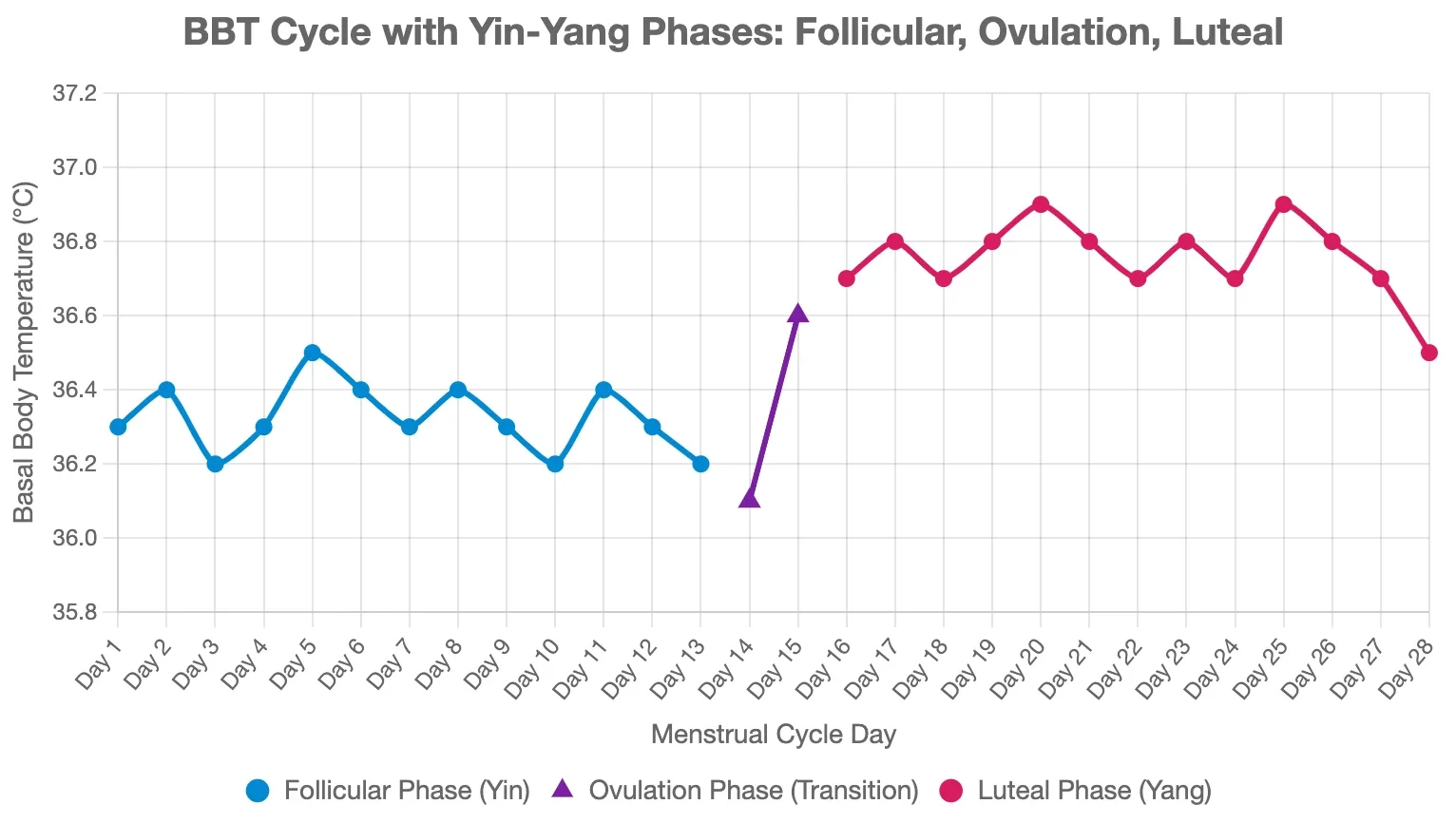
Working alongside your medical treatment plan.
When you are preparing for, or in the middle of, IVF or IUI, bring the schedule and instructions from your fertility clinic. We use that information to discuss appointment timing around stimulation, insemination, retrieval, transfer and the waiting period, as applicable to your treatment.
Consultations can include your experience of stress, sleep, digestion and treatment-related symptoms. Acupuncture is offered as complementary care; it is not presented as a way to improve medication response or implantation. Tell your fertility team about any herbal medicines you are considering, because they may interact with medicines or be unsuitable during pregnancy.
Learn more: IVF & FET acupuncture support
Bring your cycle, data, and story into one plan.
Whether you are tracking your cycle at home, preparing for fertility treatment or trying to conceive, the first visit brings your health history, symptoms and questions together. Cycle records can be useful if you have them, but you do not need a complete chart before booking.
What to expect at your first visit
Book now